

Buildings of the Wool Trade
Much of Moretonhampstead’s historic townscape was shaped by the wool trade. Wealth generated by wool helped fund the construction and development of many local buildings. The parish church, for example, was rebuilt in the fifteenth century, a time when wool was beginning to bring prosperity to towns across Devon. Around the town, cottages, workshops and stores were used by the many people involved in the wool industry. These surviving buildings offer a glimpse into a time when wool was at the heart of life in Moretonhampstead.
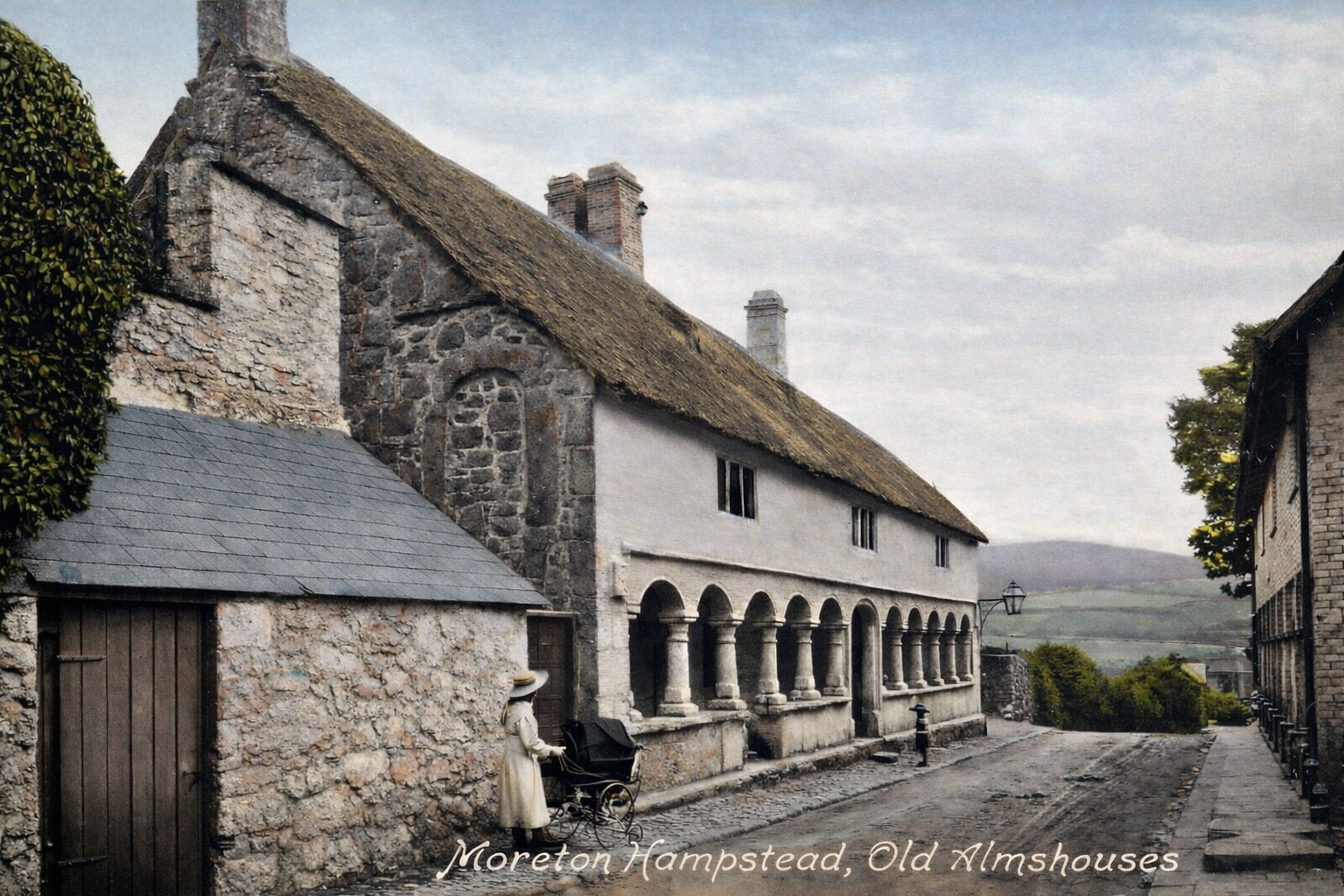
The Almshouses, 1920s

Woolcombers Cottage, Ford Street
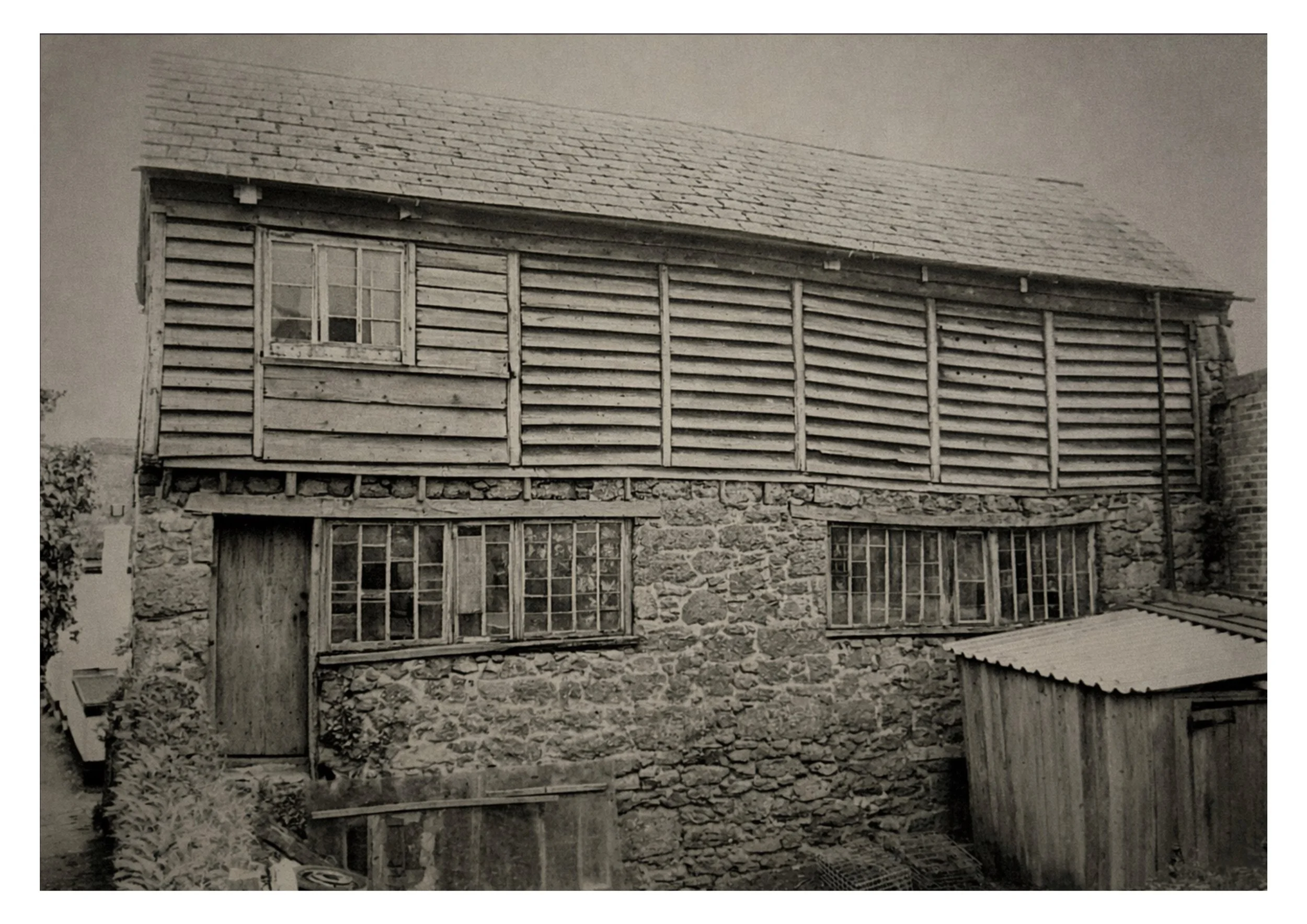
Bow Lane Wool Store, late nineteenth century
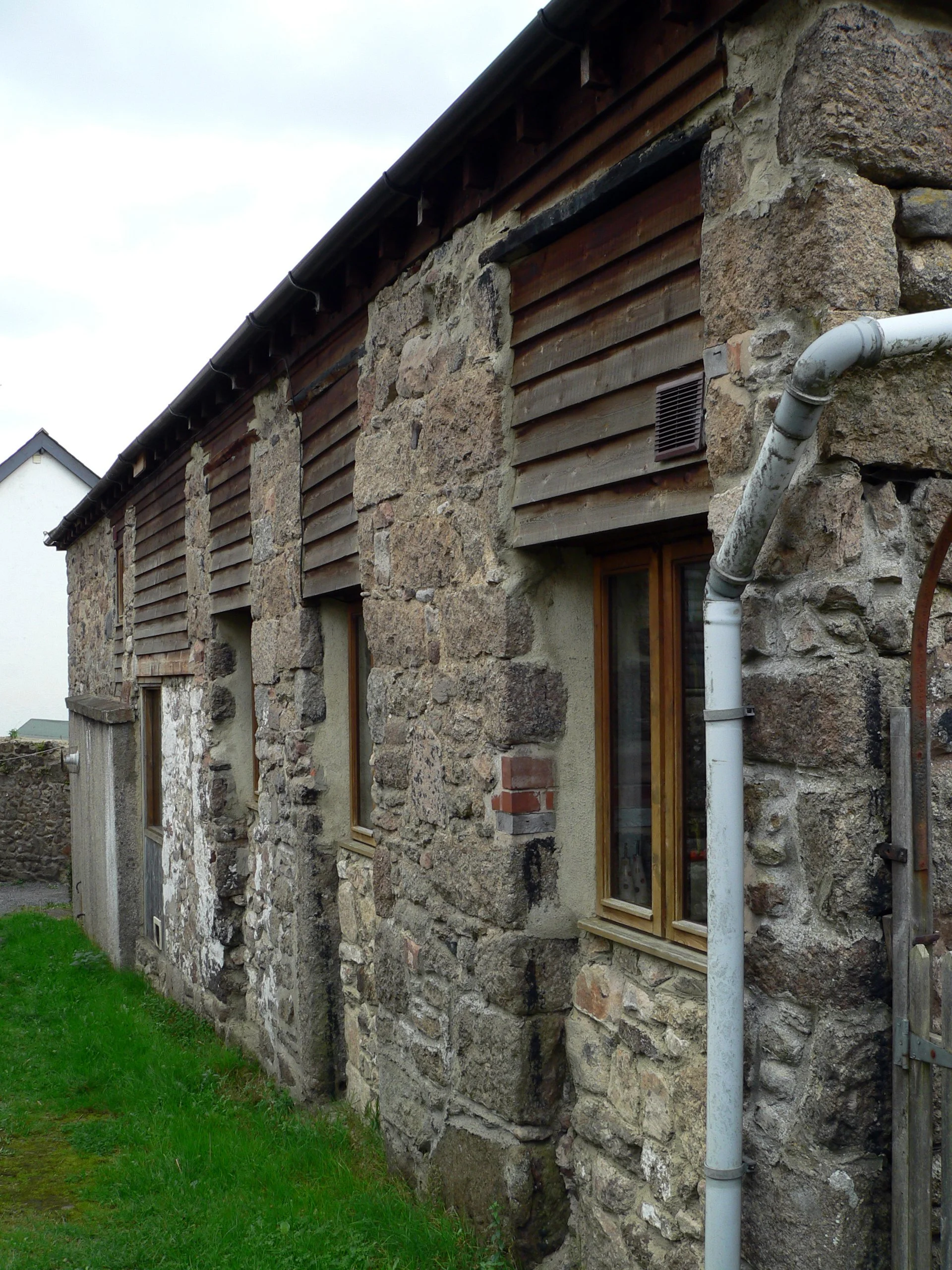
Court Street, Drying Wool Store
Moving Wool across the Moor
The wool trade around Moretonhampstead relied on the movement of goods between farms, villages, the town and Exeter. Serge makers travelled through the surrounding countryside buying wool directly from farmers and organising its journey through the different stages of production.
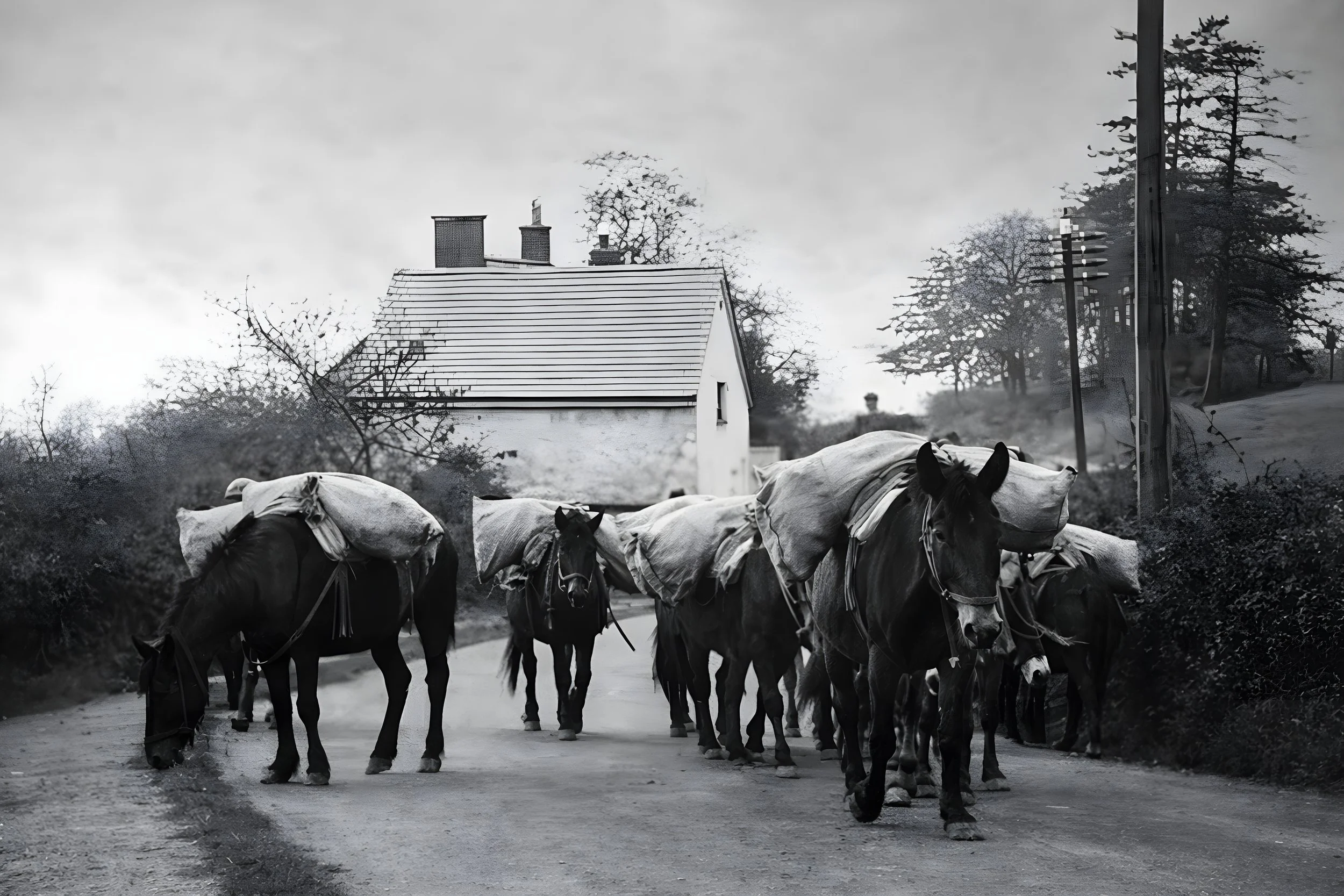
Packhorse train transporting wool and cloth in Devon, early 1950s
Transporting wool was not always easy. Roads around the town were often rough and difficult to travel. Loads were commonly carried by packhorse or moved using sledges known as “truck–a–mucks.” Because of these methods, farms, villages, the town and Exeter were closely connected through the local wool industry.
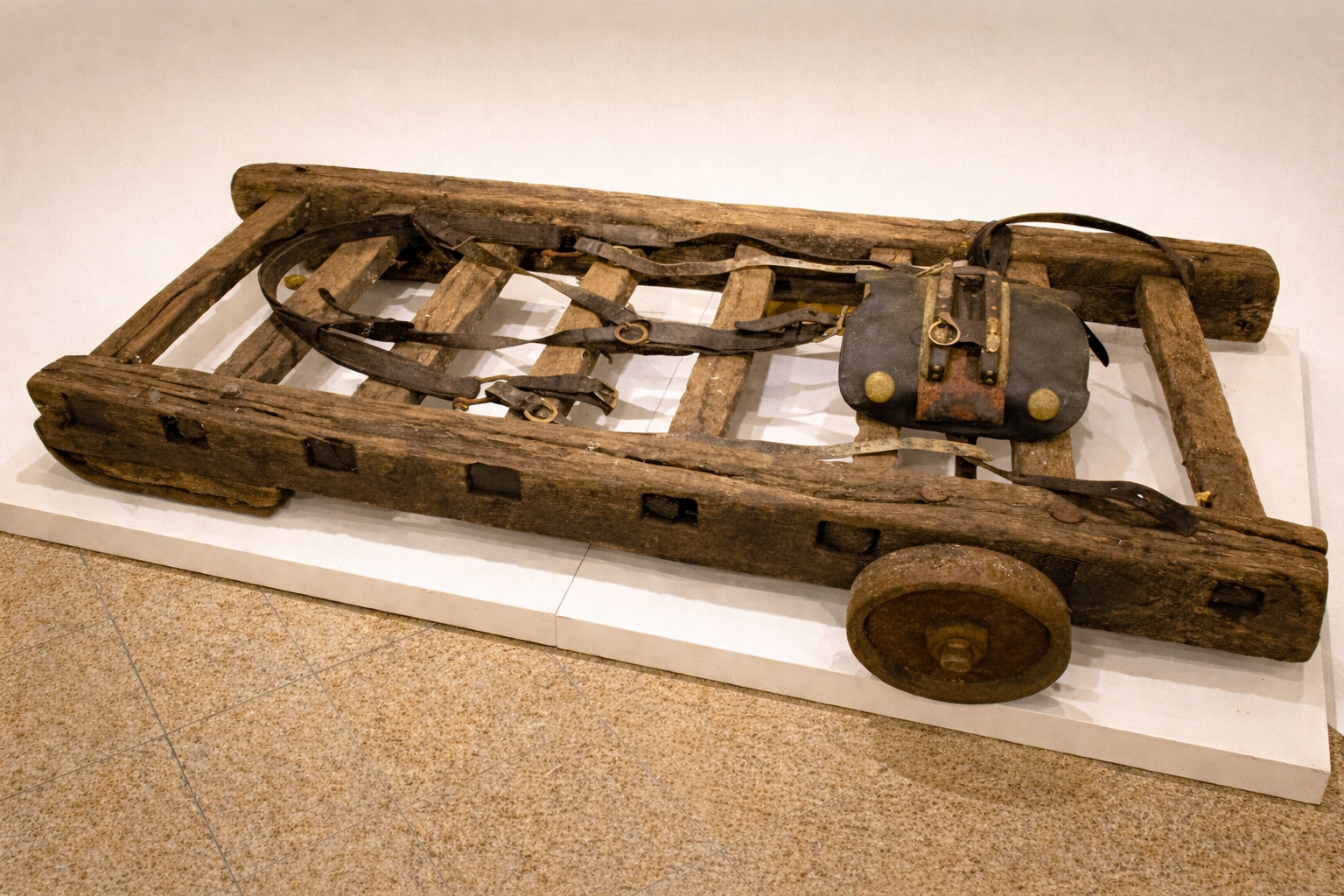
Dartmoor truck–a–muck used until the 1970s
Market Day
Sheep and wool were once a familiar part of daily life in Moretonhampstead. Farmers brought sheep into town for market, and animals were often herded through the streets and the square.
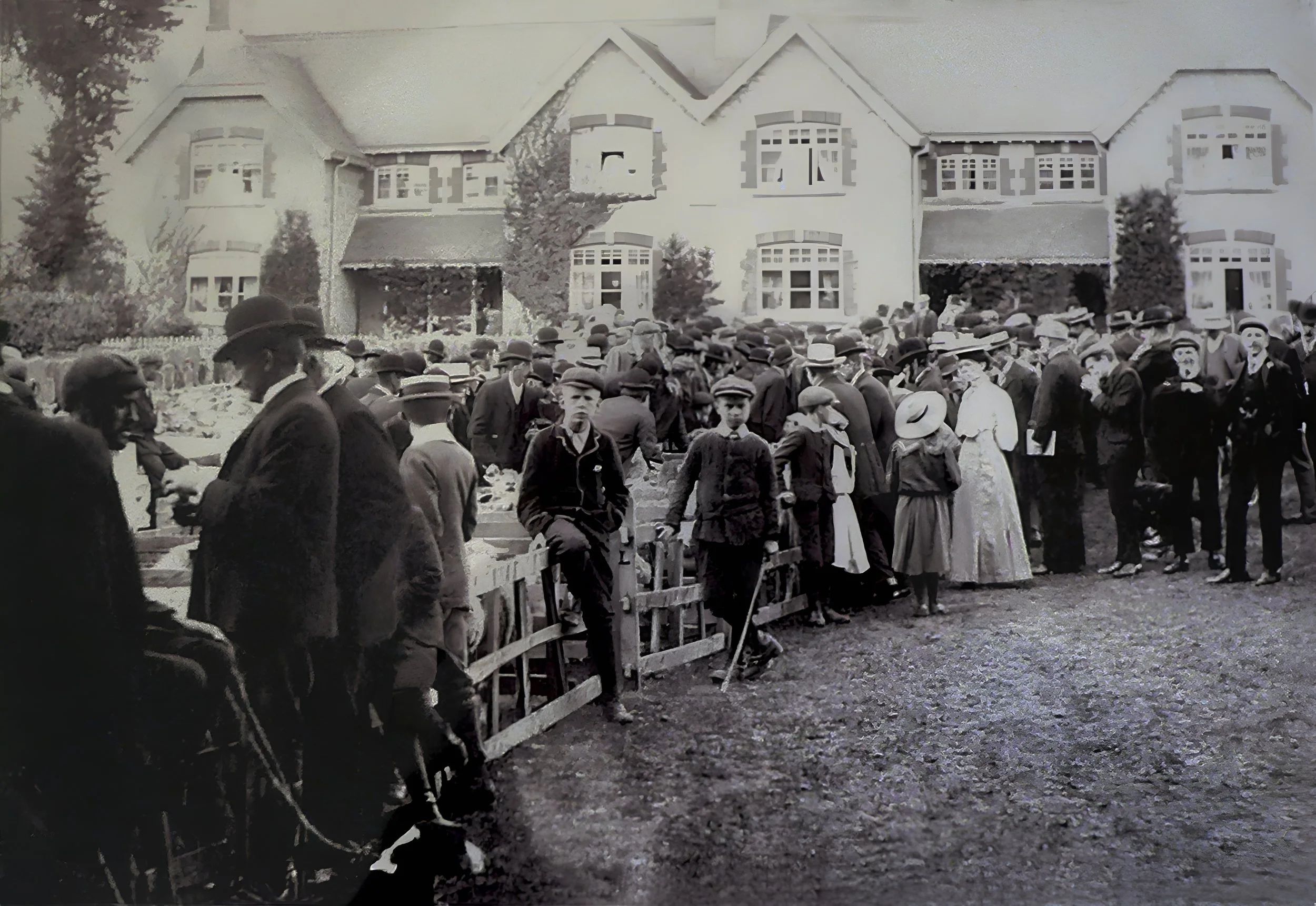
Moretonhampstead sheep market c1910 (held until 1940 on the site which is now Station Road car park)
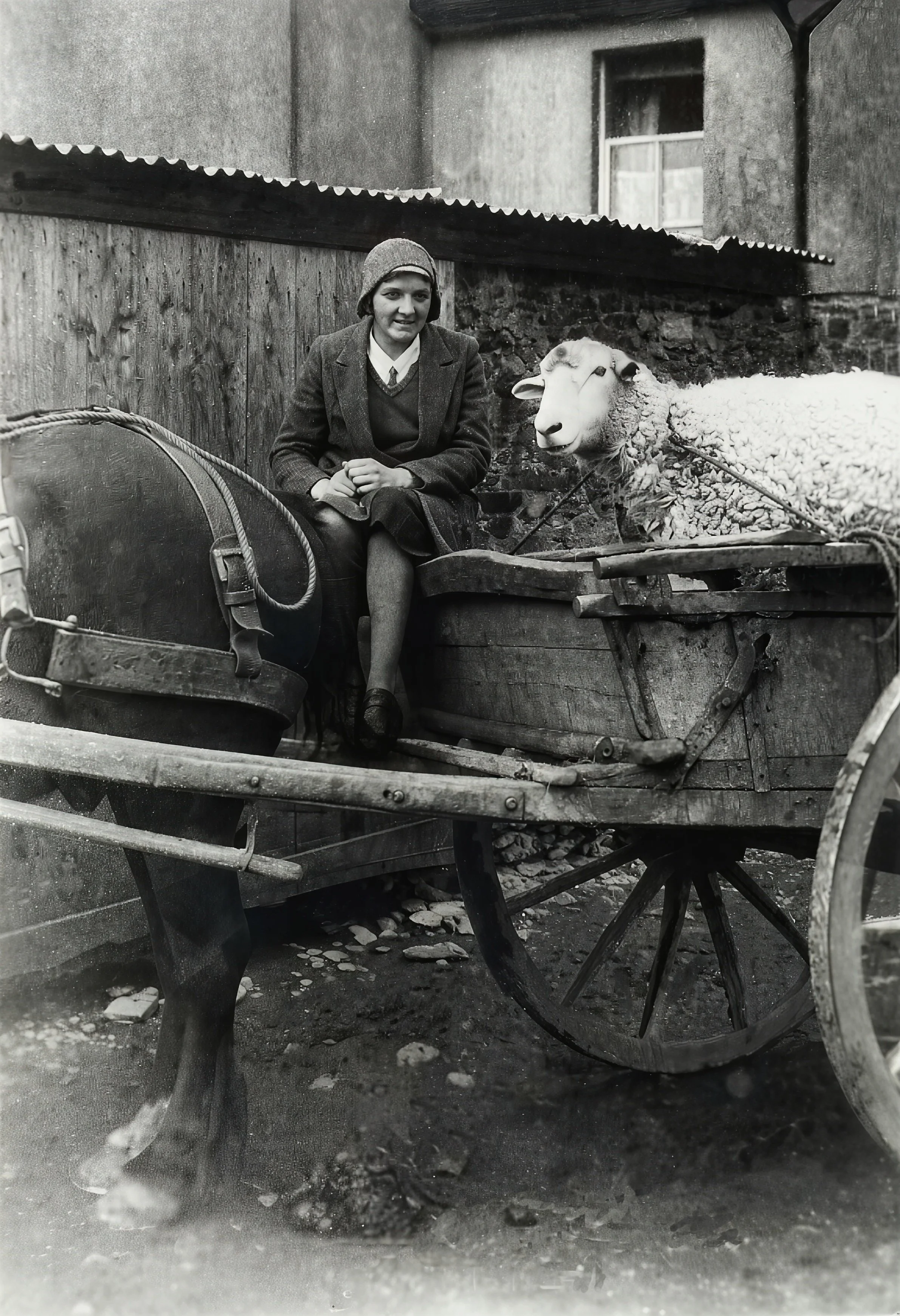
Mrs Violet Sanders (née Brimblecombe) from Moretonhampstead, pictured c1925 on a farm in Dousland taking a sheep to market in Meavy
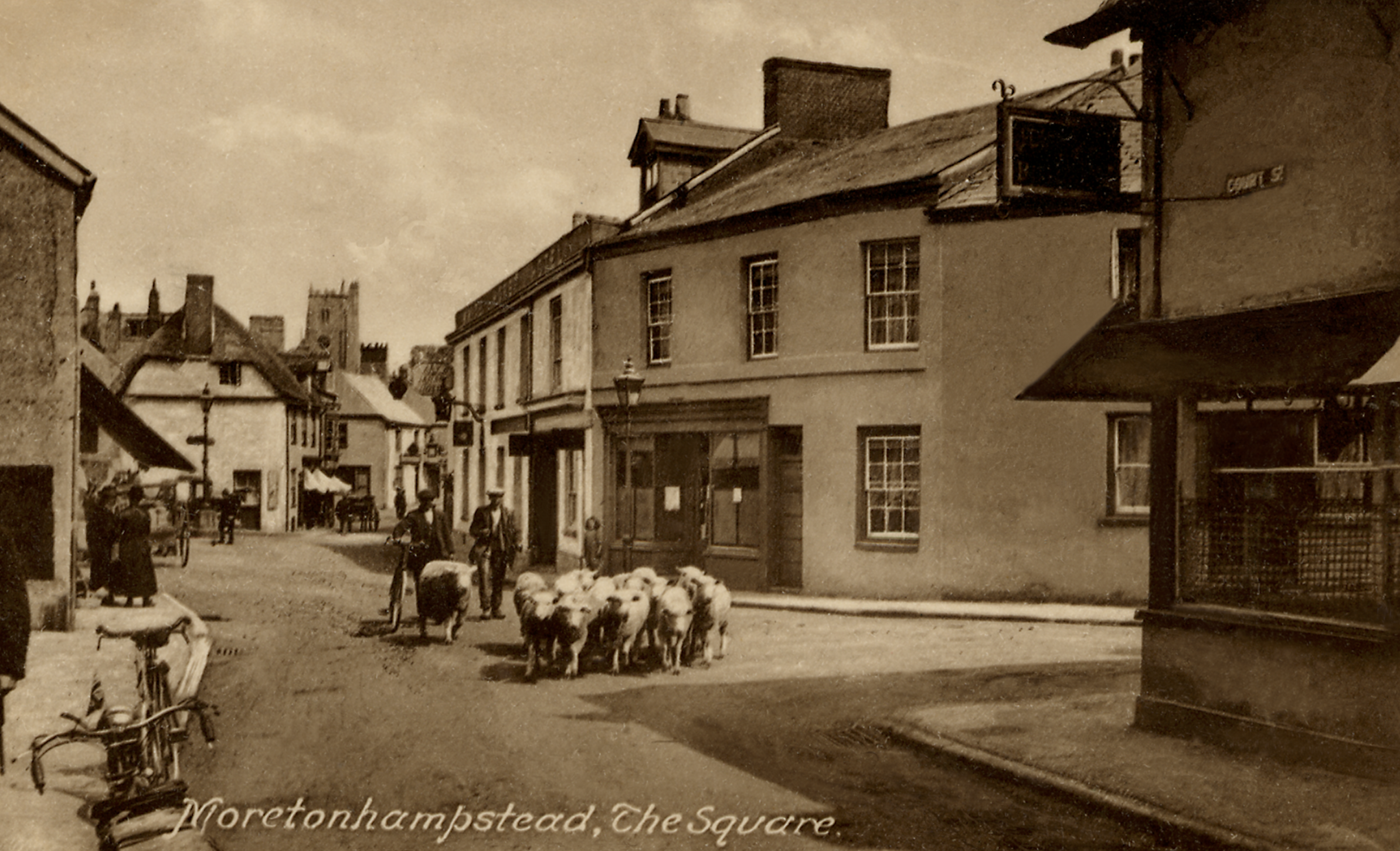
Sheep being herded through Moretonhampstead Square c1930